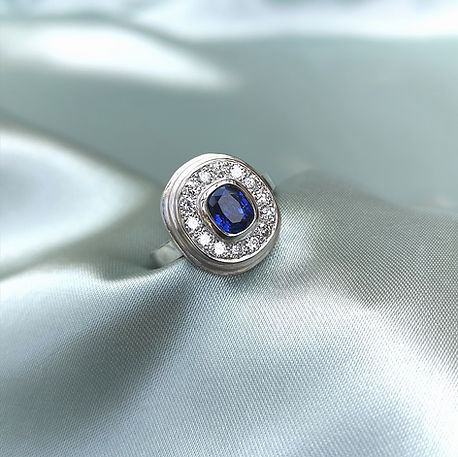
Remodelling Jewellery
Remodelling is a wonderful way to repurpose heirloom jewellery & gemstones. It allows the sentimental & material value of your jewellery to be carried forward into a modern design that suits your taste & lifestyle. Below are the 10 most commonly asked questions to help you get started.
1. What items can I use to remodel?
We usually recommend remodelling gold or platinum jewellery, particularly pieces that carry a hallmark. A hallmark indicates that the metal has been tested and assayed to meet official standards. We can often smelt down broken jewellery, old pieces, watches and coins. Both hallmarked and un-hallmarked items can be assessed. If you’re unsure what can be used, simply show me everything you have, and I’ll be happy to assess and advise.
2. Can I remodel gemstones or pearl?
Yes, gemstones can often be reused, whether they are loose or set within an existing piece. An in-person inspection is essential, as each stone needs to be checked under a microscope to ensure it is in good condition and able to withstand unsetting & resetting.Over time, gemstones can become chipped, scratched, or worn, and sometimes damage is hidden beneath the settings. I’ll carefully assess each stone and advise you on the best options. Pearls and opals are often not suitable for remodelling, as removing them, especially if glued, carries a risk of damage. In such cases, I can advise on the risks involved and offer replacement stones if the original is unusable. Customers are responsible for accepting the risk to gemstones during the remodelling process.


3. Can I remodel Silver?
Technically, yes, silver can be remodelled. However, smelting silver is a labour-intensive process, and the cost of labour will often outweigh the value of the metal itself. For this reason, I generally recommend starting a silver commission using new or recycled silver, unless the piece holds significant sentimental value.
4. Can I do the remodelling remotely?
Yes, remodelling can be done remotely. The best place to start is to fill in the bespoke quote form and follow by booking an online consultation session. Clear, close-up photographs of your jewellery will give me a good starting point and allow me to provide a rough estimate. However, before any design work begins, I’ll need to carry out a closer inspection, including examining the gemstones, checking hallmarks, weighing, and testing the metal. To ensure any sketches and designs are accurately sized to your stones. If visiting my Bristol studio isn’t convenient, you’re very welcome to send your jewellery to me via a fully insured parcel.
5. What can I remodel them into?
I can remodel your jewellery into everyday pieces, engagement rings, or wedding bands. A good place to start is by thinking about the type of jewellery you’d enjoy wearing most — whether that’s a pair of classic diamond studs, a set of stacking rings to pass down, or a necklace worn close to your heart. Engagement rings and wedding bands are often a favourite for many clients. If you’re unsure, I’m happy to guide you through ideas. You can also create a small Pinterest mood board of 3–5 images showing the aesthetic you like, which is enough for me to develop tailored design ideas just for you.
6. How much does remodelling cost?
Remodelling usually starts from £450 for a plain wedding band, including smelting, labour, hallmarking, and VAT. The final cost depends on the design complexity, method of making, additional metal and hours of labour. I can provide a tailored quote based on your brief, and I’m happy to design within a budget. If the project involves stone setting, please allow a minimum of £900, and for additional metal or new stones, from £1,500. Some projects, like turning a single earring into a pendant, can be done without smelting and are often a more cost effective option. I can get pretty creative!


7. Is it worth remodelling, or should I scrap the metal?
Financially, it’s not always worth remodelling every piece. For example, if most of your jewellery is 9ct yellow gold and you’ll need to add a lot of new metal, it may make more sense to scrap the old pieces and start fresh. When I provide a quote, I can also include the cost of using new metal so you can compare. That said, if your goal is sentimental value, remodelling is often priceless.
8. Can you mix 9ct and 18ct gold together?
Yes, it’s possible to mix different carat golds. I can give a rough idea of what the final carat will be, for example, mixing mostly 9ct with some 18ct gold may result in approximately 12ct. However, in the UK, the assay office only hallmarks 9ct, 14ct, or 18ct, and will always hallmark the lowest carat. So in this example, the piece would be marked as 9ct. We do not recommend mixing different colours of gold or gold with platinum.
9. What do you do with the left over metal or stone?
Before starting, each piece is carefully weighed, measured, and documented. Any leftover metal or stones will be returned to you, which you can keep for a future project or use as credit towards the remaining balance.
10. Can you provide a Valuation?
Yes! If you’d like to know the value of your newly remodelled piece for insurance purposes, we offer a valuation service.